Article
Content Didn't Break at Creation. It Broke at Distribution.
Editorial note: Published by Scheduloid. We aim for clear, practical guidance; where we compare vendors, verify pricing and features on each provider’s official site before you buy.
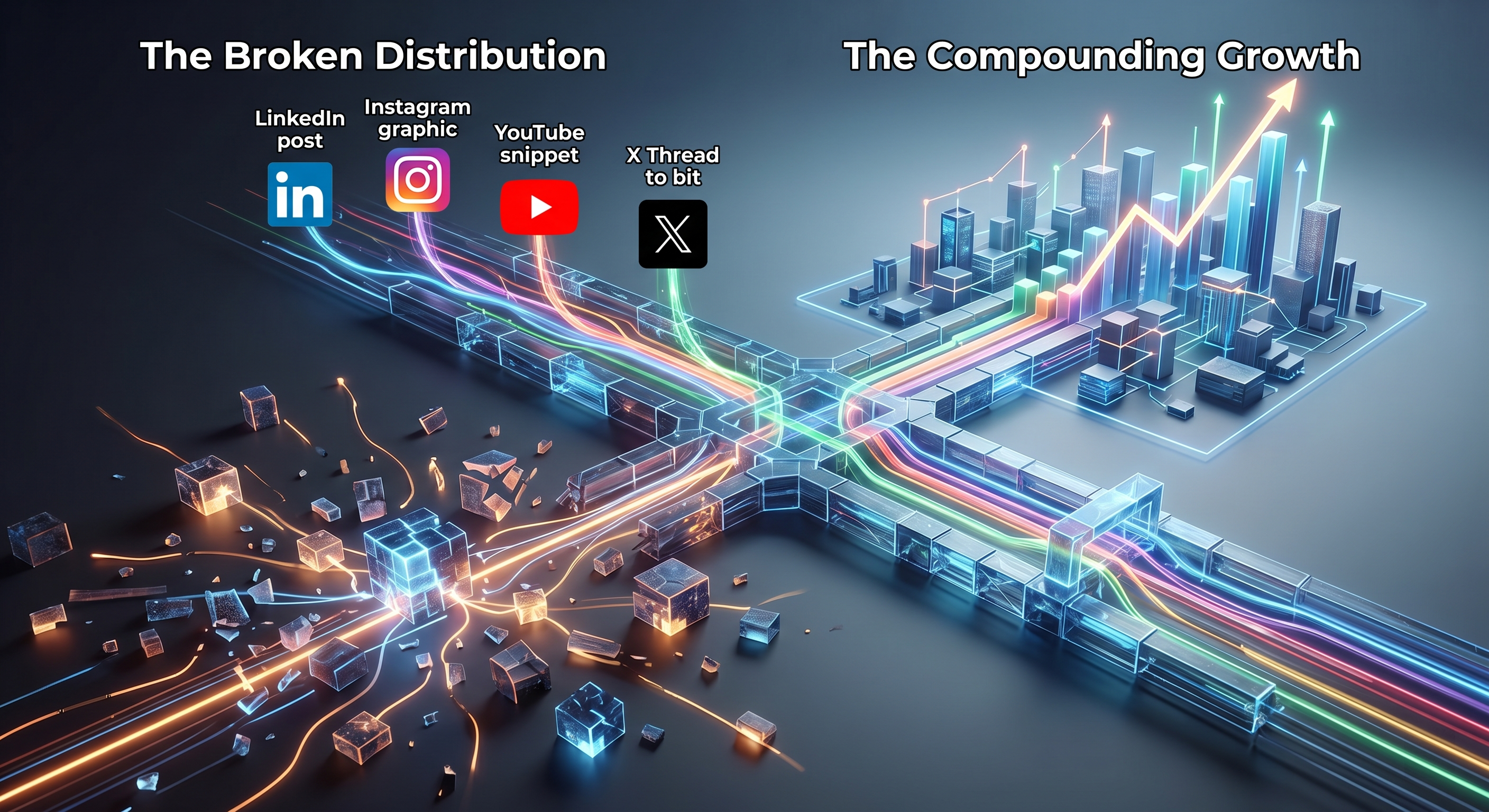
We didn’t think we had a content problem. Ideas were flowing, the team was shipping regularly, and engagement was decent enough to keep going. From the outside, it looked like we were doing everything right. But growth wasn’t compounding, and that’s what didn’t add up. Something underneath the surface wasn’t working.
We were publishing across multiple platforms — X, LinkedIn, Instagram, and YouTube — with the same underlying ideas. The effort was consistent, but the results were inconsistent. Some posts would take off on one platform and completely stall on another. Over time, it became clear that this wasn’t randomness; it was a structural issue.
The first realization was uncomfortable. We weren’t failing at content quality, we were failing at context. Each platform behaves like its own ecosystem, with different expectations around format, pacing, and entry points. We were treating them like distribution channels, when in reality they were environments that required adaptation.
This realization becomes even clearer when you look at how consistency alone behaves without a **content repurposing strategy** — something we break down in detail here: We Were Consistent. We Still Didn’t Grow.
At that point, we changed how we approached content. Instead of thinking in terms of “posts,” we started thinking in terms of “ideas.” That shift sounds small, but it changes the entire workflow. Once you isolate a core idea, everything else becomes a transformation problem handled by a **cross platform social media tool**.
That’s where introducing a comprehensive **content repurposing tool** made the difference. We moved the workflow into Scheduloid, not because we needed more tools, but because we needed structure. The goal wasn’t to create faster, it was to create once and **schedule posts to multiple social media platforms** intelligently.
This shift from isolated posts to a connected system is the same pattern we saw when consistency alone stopped working — and only improved once structure was introduced: We Were Consistent. We Still Didn’t Grow.
The system started with a single input. One idea would expand into multiple outputs, each shaped for a specific platform. A long-form concept could become a structured LinkedIn post, a fast-moving X thread, a short-form video, and a visual-first Instagram asset. The key difference was that nothing felt duplicated; everything felt native.
This is where the real shift happened. Repurposing stopped being about editing and resizing content, and started becoming about translating intent. Platforms don’t reward duplication, they reward relevance. Once the content matched the behavior of each platform, performance stopped feeling random.
Another layer that changed outcomes was timing. Earlier, we posted based on convenience — usually right after something was created. But once we started planning content through a centralized calendar, patterns started emerging. Certain time windows consistently outperformed others, and that predictability changed how we approached publishing.
Engagement was the final piece we had underestimated. We had assumed growth was primarily driven by content output, but it turned out to be heavily influenced by response speed and interaction consistency. With automation supporting engagement, the gap between posting and interacting disappeared, and that had a noticeable impact on reach.
Looking back, the biggest mistake wasn’t lack of effort. It was assuming that more content would solve the problem. In reality, the constraint was distribution — specifically, consistent and platform-aware distribution. Once that was solved, output didn’t just increase, it started compounding.
If your content feels consistent but not compounding, you’re likely facing a structure problem, not a creation problem.
Read next: We Were Consistent. We Still Didn’t Grow
Or explore how tools like Scheduloid simplify this entire workflow: Scheduloid vs Sendible — A Better Alternative.
What Actually Changed in the Workflow
Idea → Multi-Platform Output
One idea now drives multiple formats, reducing the need to create separately for each platform. This removes duplication of effort and increases output without additional time.
Platform-Native Repurposing
Content is adapted to match platform behavior instead of being copied across channels. This improves engagement because each format feels native to the audience.
Centralized Content Planning
All content sits in a single calendar view, making it easier to plan, track, and maintain consistency. This replaces scattered workflows across multiple tools.
AI-Assisted Scheduling
With the **best social media scheduler for small business**, posting times are no longer guesswork, as patterns and recommendations guide when content goes live. This leads to more predictable performance.
Always-On Engagement Layer
Advanced **social media posting automation** ensures that interactions continue even when you’re offline. This maintains activity signals for **automated social media posting** that platforms use to boost visibility.
Read Next
Explore Scheduloid